Why automotive needs AAP
A connected tool still needs to explain what its data means. Does a price include required fees? Does a feature exist on this vehicle? Is a test drive booked, or merely requested?
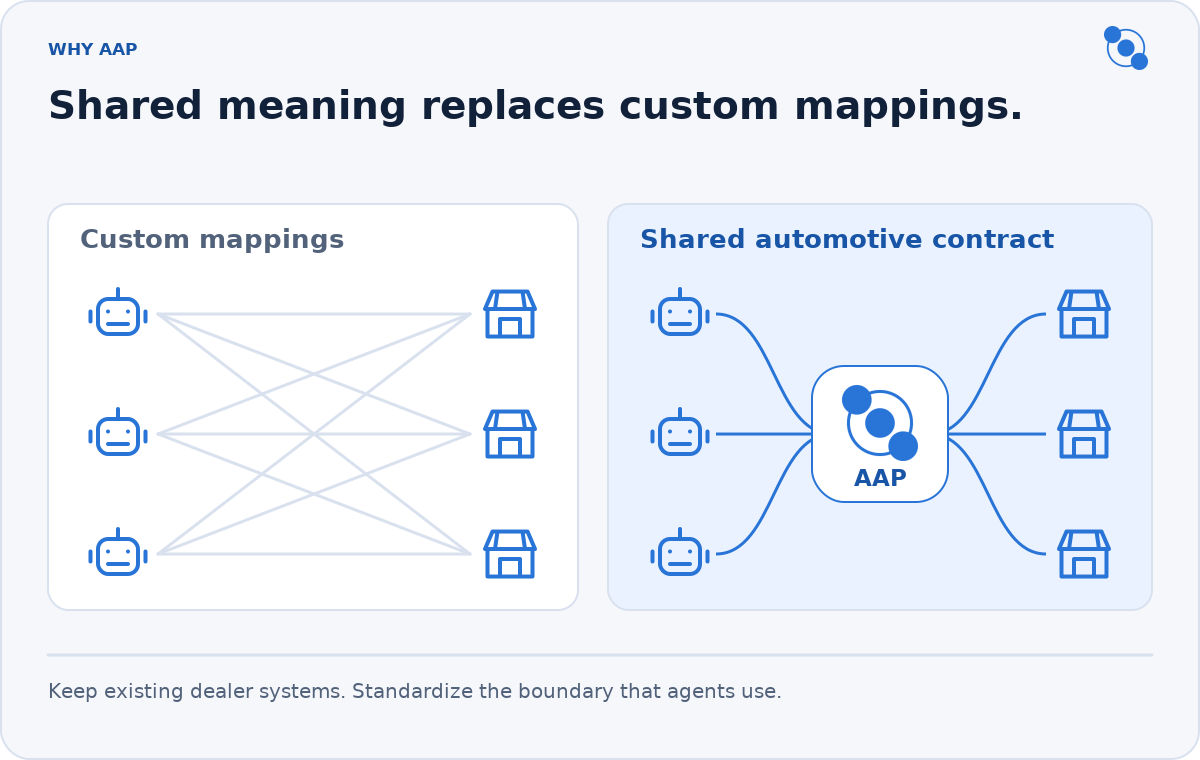
AAP makes those answers consistent across dealerships and protocols.
| Automotive question | AAP contract |
|---|---|
| Is this listing still eligible? | Controlled availability and a source update timestamp |
| Does it meet the buyer's constraints? | Declared filters, evidence, radius/distance and complete pagination |
| Which price can I compare? | Authoritative advertised price with mandatory dealer charges included |
| May I contact this dealer for the buyer? | An explicit consent grant for this payload and these channels |
| Does a rebate lower the price I can quote? | Unconditional rebates are already in price; conditional ones stay separate |
| What is the trade-in worth, and may a lender check credit? | Optional skills: a labelled estimate or offer, and each applicant's own credit consent |
| What happened after submission? | A lead ID, deduplicated retries and an explicit appointment outcome |
Built on the protocols agents use
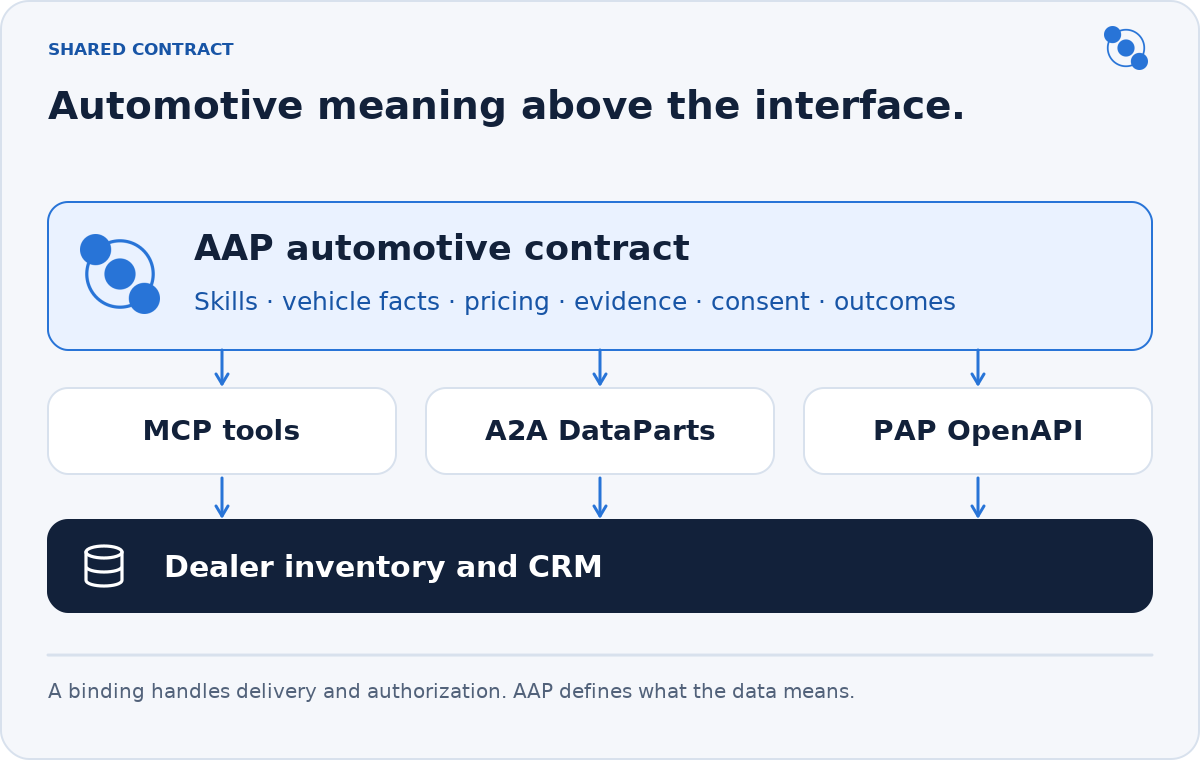
| Standard | Its role in AAP 4.0 |
|---|---|
| MCP | Native, self-describing tools with complete schemas and structured results |
| A2A | Agent Card discovery and typed automotive messages |
| Personal Agent Protocol 1.0 | Company identity, delegated per-request Sessions, optional OAuth and native APIs |
| ADF/XML | A practical delivery bridge to existing dealer lead systems |
AAP supplies automotive semantics and uses each protocol's own transport and authentication rules. An operator can route all three interfaces to the same inventory, pricing and lead services.
A vertical contract with a clear boundary
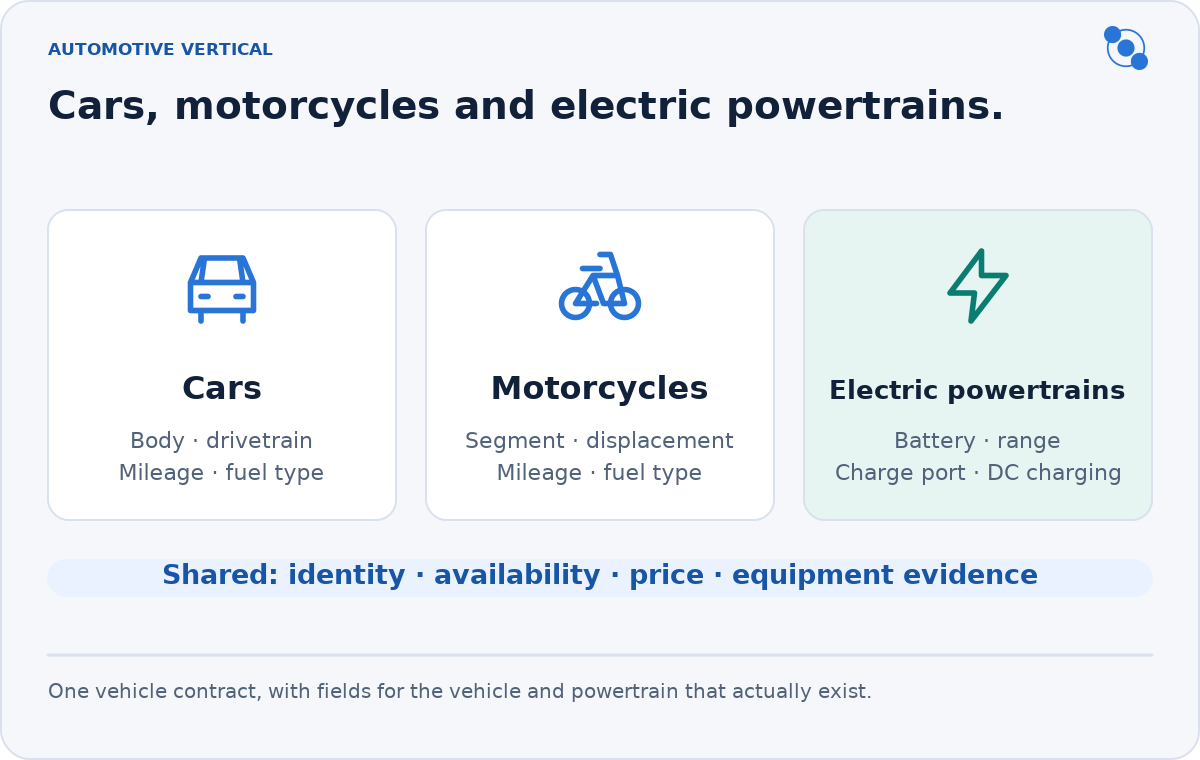
Cars, electric vehicles, motorcycles, RVs and trailers share the same five core skills and two optional skills. Vehicle-specific fields carry range, charging, engine displacement and other known attributes without changing the call flow.
The release covers research and consented dealer contact, plus optional trade-in valuation and credit application submission. It does not define checkout, payments, reservations or binding purchase quotes. An accepted lead is a conversation starter; a confirmed appointment is an explicit, separate outcome. A trade-in estimate is not an offer, and a declined credit outcome in a response is not the creditor's adverse-action notice.
Use conformance to distinguish a validated contract from a verified deployment. Publishing discovery alone does not implement the service, prove a client's support, or establish universal agent adoption.